
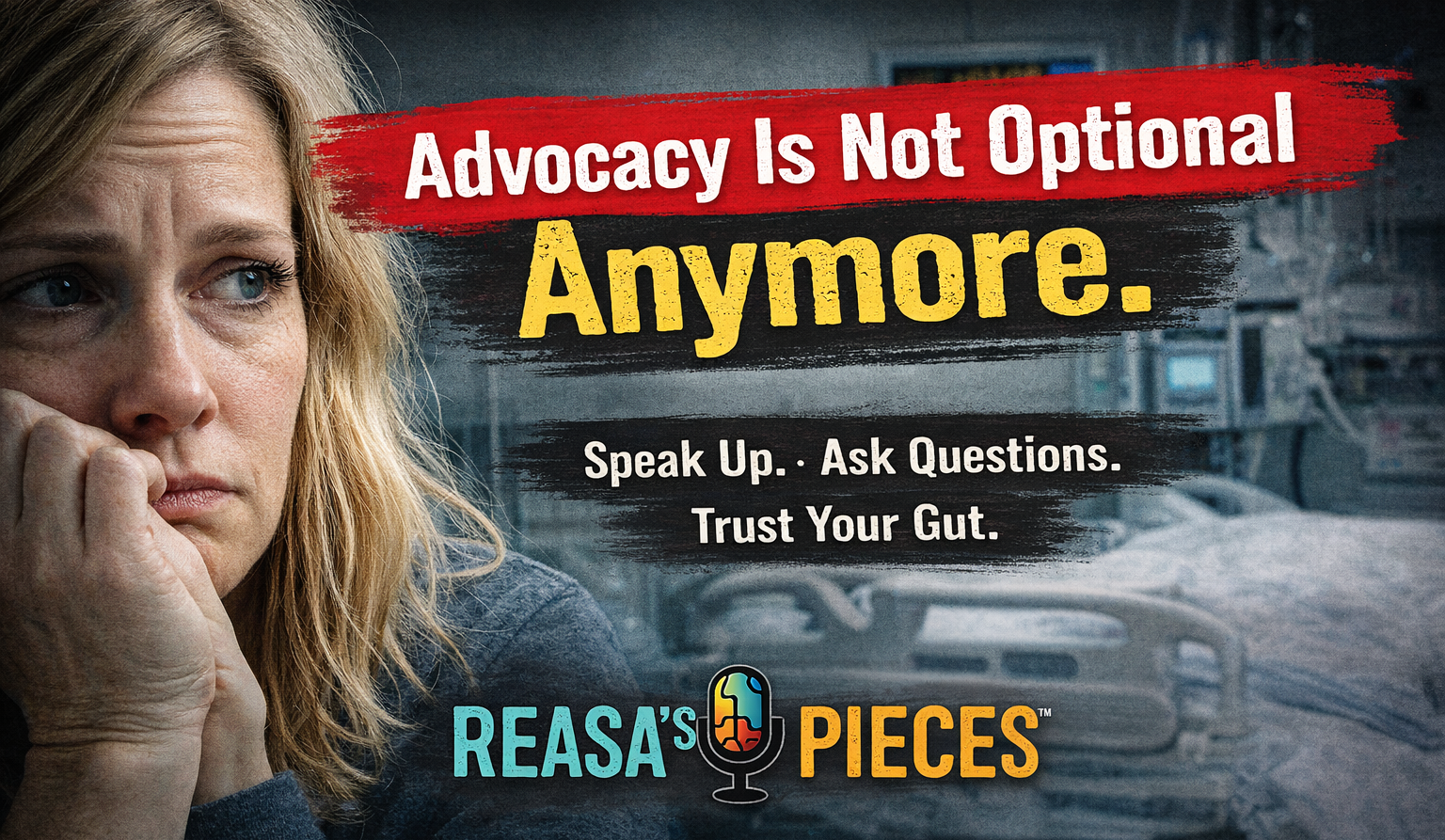
I used to think if you went to the hospital, did what they said, and trusted the process… you would be okay. That is what we are all taught, right?
You show up. You explain what is wrong. They take it from there.
But here is what I know now: That is not always how it works. And no one really prepares you for that.
The Moment Everything Changes
There is a moment, whether you realize it right away or not, when something does not sit right. Maybe it is how your child looks. Maybe it is the way symptoms are brushed off. Maybe it is the feeling that things are moving too fast… or not fast enough.
And you start questioning: “Are we missing something?”
That question matters more than you think. Because sometimes… something is being missed.
What I Wish I Knew Sooner
No one tells you this part out loud: You are not just there to support your loved one. You are part of the safety system.
You are the only one who is there for all of it. And that matters.
Not officially. Not by training. But in reality? Yes.
Doctors rotate. Nurses change shifts. Everyone is doing their job, but no one sees the full picture the way you do.
Where Families Get Stuck
Most of us hesitate. We do not want to:
- Be “that parent”
- Question the doctor
- Come across as difficult
- Slow things down
So we stay quiet longer than we should. I did. A lot of families do. And sometimes that hesitation costs time we cannot get back.
What Advocacy Actually Looks Like
Let me be clear, advocacy is not about arguing or being confrontational. It is about speaking up when something does not make sense.
It sounds like:
- “Can you explain why this is not something more serious?”
- “What have you ruled out?”
- “What would make this dangerous?”
It looks like:
- Saying, “Something is off” even when you cannot fully explain it
- Asking for more information before agreeing to go home
- Pointing out changes the second you notice them
And yes… sometimes it means pushing a little.
The Hard Truth
This is the part that is uncomfortable: The system does not catch everything.
Not because people do not care. But because it is busy, fast, and human. Things get missed. And when they do, families are often the last line of defense.
No one says that when you walk in the door. But it is true.
If Something Feels Off, Say It
I do not care how small it seems. If something feels off:
- Say it
- Ask about it
- Do not let it go
And if you leave and things get worse? Go back. Immediately. Do not second guess yourself because “they already checked.” Some conditions do not wait.
Why I Am Saying This Out Loud
Because I wish someone had said it to me. Not in a brochure. Not in a checklist. But like this—real and honest.
You can trust doctors and ask questions. You can respect the system and challenge it when needed. Those two things are not in conflict. They are how you protect the people you love.
This Is Bigger Than One Family
Advocacy helps your family in the moment. But accountability is what protects the next one.
Right now, too many things fall into the gap between:
“What should happen”
and
“What actually happens”
That gap is where lives change forever. And it should not be.
If You Take One Thing From This
Trust your instincts. Then act on them. Do not wait to feel “sure.” Do not wait for permission.
Say something. Ask the question. Push a little when it matters.
Because right now… Advocacy is not optional anymore.
Next Step
If this resonates with you, do not just scroll past it.
Share it with another parent. Talk about it with your family.
Start asking better questions before you ever need to.
Because the moment you need advocacy is not the moment you want to learn how to do it.